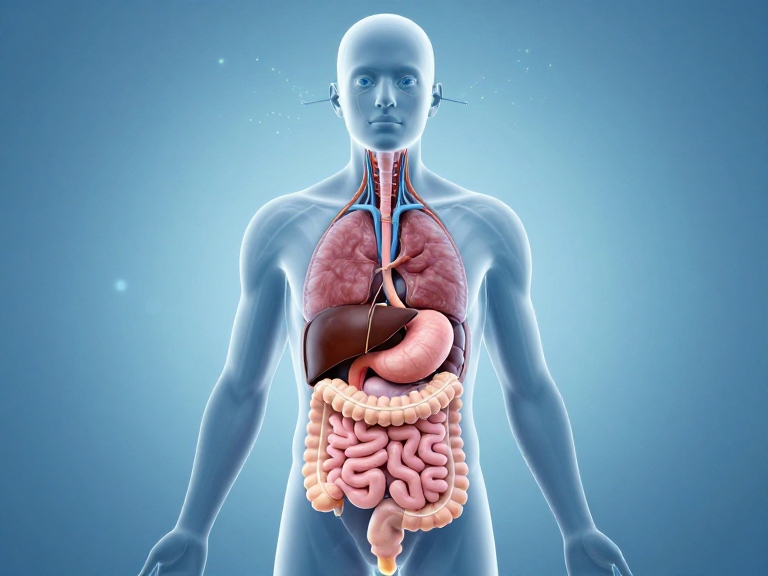
Gut & Eye Health
Explore the possible relationships between digestion, the gut microbiome and eye health.
Read the Guide
Your body works as an interconnected system. From the nutrients you absorb to the way your immune system responds, many processes contribute to everyday wellbeing. Exploring how these processes relate to gut health and eye health offers a broader perspective on looking after yourself.
Explore the ScienceIt is easy to think about health one organ or symptom at a time. In reality, the body relies on many systems working together. Digestion, nutrient absorption, metabolism, circulation and immune activity all contribute to normal physiological function.
The digestive system helps break down food and absorb nutrients. The eyes, like other tissues, depend on an adequate supply of nutrients and oxygen to function. Meanwhile, metabolic and immune processes help regulate conditions throughout the body. These overlapping roles are part of why researchers investigate possible links between digestive health and eye health.
The relationship is complex, however. A shared biological process does not necessarily mean that one condition causes another, or that changing one part of the body will improve a separate condition. The strength of the evidence depends on the specific relationship being studied.
Understanding connections between body systems can be useful, but each health claim still needs evidence relevant to the condition and outcome in question.
Food supplies energy and the nutrients the body uses to maintain tissues, support normal metabolism and carry out essential biological functions. Different nutrients have different roles, and the amount a person needs can depend on age, health, diet and other individual circumstances.
A balanced dietary pattern generally includes a variety of vegetables and fruits, whole grains, suitable sources of protein, and unsaturated fats. The best approach is one that meets a person's nutritional needs and can be maintained over time.

A varied diet can help provide the nutrients the body needs for normal function, including the maintenance of tissues involved in vision.
It is also important to distinguish between getting enough of a nutrient and taking more than the body needs. Supplements can be useful in particular circumstances, such as when a deficiency or increased requirement has been identified, but they are not automatically beneficial for everyone.
More is not always better. Some supplements can interact with medicines or cause harm when taken inappropriately. For this reason, nutrition is best considered as part of an overall dietary pattern rather than a search for one ingredient that promises to support several organs at once.
The immune system helps the body recognise and respond to harmful organisms and other threats. Inflammation is one part of this response. It can be important for protection and repair, but its effects depend on the context, duration and tissues involved.
Researchers are studying how immune signalling and inflammatory processes relate to different digestive and eye conditions. Certain diseases may involve overlapping pathways, while other apparent connections may be indirect or not yet well understood.
It is therefore important not to treat inflammation as a single problem with one universal solution. Inflammation has different causes and roles, and the appropriate response depends on the specific medical condition.
Finding an association between inflammation and a condition does not, on its own, prove that inflammation caused the condition or that a particular anti-inflammatory intervention will help.
Metabolism describes the chemical processes through which the body uses, stores and transforms energy and nutrients. Blood glucose regulation, lipid metabolism and other processes are relevant to overall health because they help maintain the internal conditions in which tissues function.
Some metabolic conditions are associated with complications affecting the eyes. For example, diabetes can damage blood vessels in the retina, making recommended diabetes management and eye examinations important. This is a specific, established clinical concern rather than proof that every metabolic change directly affects vision.
Metabolic health is influenced by a range of factors, including genetics, age, physical activity, dietary patterns, medicines and existing medical conditions. Individual risk cannot be accurately determined from a single habit or general wellness claim.
The term gut–eye connection describes an area of scientific interest exploring whether and how digestive health, the gut microbiome, immune signalling and other biological pathways may be related to eye health.
The gut microbiome refers to the community of microorganisms living in the digestive tract. These organisms interact with their environment and are involved in processes such as the breakdown of certain dietary components. Researchers are investigating whether changes in the microbiome are associated with particular inflammatory, immune or eye conditions.

Scientists are investigating how the gut microbiome, immune activity and other biological processes might interact with different tissues, including the eyes.
This research is promising as a way to ask new questions about health, but the evidence is not equally strong for every proposed link. Findings from laboratory experiments or animal studies do not necessarily translate into a proven benefit for people.
Likewise, an association observed in a human study does not automatically demonstrate that changing the microbiome will prevent or treat an eye condition.
There is no single dietary change, probiotic or supplement that should be assumed to improve eye health through the gut. Specific treatments require evidence from studies designed to assess the relevant condition and outcome. People with digestive symptoms or eye concerns should seek advice appropriate to their situation.
A whole-body perspective does not have to mean following a complicated routine. Practical habits can support general wellbeing while leaving room for individual needs and professional medical guidance.
These habits can contribute to general health, but they cannot guarantee that a particular condition will be prevented. Individual risk and appropriate care vary from person to person.
Sudden vision loss, new flashes or a sudden increase in floaters, a curtain-like shadow across your vision, or significant eye pain can require urgent assessment. Do not assume that new or worsening symptoms are caused by nutrition or digestive health.
Health research can help identify associations, explore possible mechanisms and test whether an intervention produces a meaningful benefit. These are different steps in the process of establishing reliable medical knowledge.
A laboratory finding may suggest how a biological process works, while an observational study may identify a relationship between two factors. Clinical trials and other well-designed studies can help determine whether an intervention is safe and effective for a particular use.
Even when a study reports a positive result, its limitations matter. The number and characteristics of participants, length of follow-up, comparison group, outcome measures and potential sources of bias can all affect how its findings should be interpreted.
Evidence for one ingredient or product also cannot automatically be applied to another. Formulation, dose, population and intended use may differ. Claims should be proportionate to the quality and relevance of the evidence supporting them.
A careful approach does not mean dismissing new research. It means recognising the difference between an interesting possibility and a conclusion supported by sufficiently strong evidence.
The digestive system, immune system, metabolism and eyes function within the same body. Studying how they interact can improve scientific understanding and help researchers develop more precise questions about health and disease.
At the same time, broad concepts should not replace condition- specific evidence. A proposed connection does not establish a diagnosis, and a strategy intended to support one body system should not be assumed to treat another.
The most useful starting point is to meet your individual nutritional needs, maintain sustainable health habits, manage existing conditions appropriately and seek qualified advice when you have specific concerns.
The following resources provide additional information on eye care, healthy eating and scientific literature related to the topics discussed in this article.
The digestive system, immune system, metabolism and eyes are connected through the many processes that keep the body functioning. Understanding these relationships can help put everyday health and ongoing scientific research into perspective.
A balanced approach is a sensible starting point: meet your nutritional needs, maintain sustainable habits, manage existing health conditions and keep up with appropriate eye care.
Remember that a possible biological connection does not automatically establish a treatment or prove that changing one part of the body will improve another. Health decisions should be guided by relevant evidence and individual circumstances.
Health information disclaimer: This article is intended for general educational purposes only. It does not replace professional medical advice, diagnosis or treatment. Consult a qualified healthcare professional about personal health concerns, and do not delay or disregard professional care based on information presented here.
Explore more educational guides about digestion, nutrition, immune regulation and the connections researchers are investigating between the gut and eyes.
Explore the possible relationships between digestion, the gut microbiome and eye health.
Read the Guide
Discover why researchers are investigating relationships between gut microbes, immune activity and eye health.
Read the Guide
Learn how to evaluate supplement evidence, ingredient labels, product quality and safety.
Read the Guide