Keep Moving
Regular, suitable physical activity helps strengthen the muscles that support joints and can help maintain mobility. Walking, swimming and cycling are options many people can adapt to their abilities.

Understanding Your Body
Healthy joints help us move through everyday life with greater ease. Discover how hyaluronan supports the natural lubrication of joints, why synovial fluid matters, and which everyday habits can contribute to long-term joint well-being.
01 / The Basics
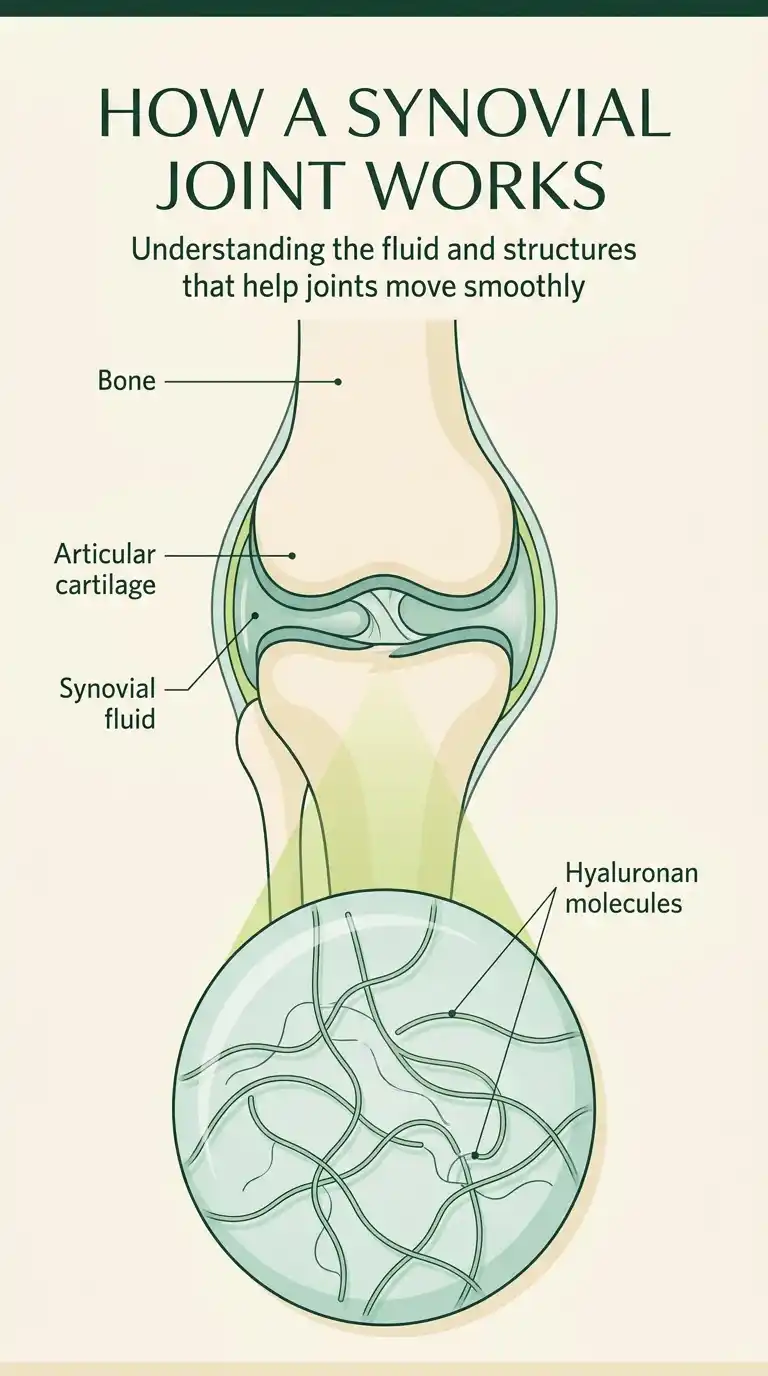
Inside many freely movable joints is a small amount of synovial fluid, a naturally occurring liquid that helps reduce friction as the joint moves. It also helps supply nutrients to the articular cartilage, the smooth tissue covering the ends of bones.
One important component of this fluid is hyaluronan, also known as hyaluronic acid. This large molecule attracts and holds water, contributing to the fluid's viscosity and its ability to help lubricate and cushion joint surfaces.
The result is part of a finely balanced system that helps joints handle the repeated movements of walking, bending, reaching and other daily activities.
02 / Why It Matters
Hyaluronan helps give synovial fluid its characteristic thickness and elastic properties. These properties are important for lubrication and for the way fluid responds to pressure during movement.
Joint health depends on more than one substance. Cartilage, bone, muscles, tendons, ligaments and the joint lining all work together. Changes in any of these structures can influence comfort, flexibility and mobility.
The composition of synovial fluid can change with joint conditions and age, but these changes do not happen at the same rate for everyone. Joint symptoms should be considered in the context of a person's overall health.
03 / Everyday Movement
There is no single food or molecule that guarantees healthy joints. Consistent movement, balanced nutrition and appropriate care are more useful places to start.
Regular, suitable physical activity helps strengthen the muscles that support joints and can help maintain mobility. Walking, swimming and cycling are options many people can adapt to their abilities.
A varied diet with vegetables, fruits, whole grains, protein sources and healthy fats helps provide the nutrients your body needs to maintain tissues and support general well-being.
Allow time to recover after demanding activity, increase exercise gradually and pay attention to persistent pain rather than pushing through symptoms.
04 / Nutrition & Evidence
Satsumaimo is the Japanese name for sweet potato. It can be part of a balanced eating pattern and provides nutrients such as carbohydrates, fiber and beta-carotene, depending on the variety and preparation.
Researchers study how dietary patterns and specific nutrients relate to inflammation, cartilage and joint conditions. However, eating sweet potatoes or other particular foods has not been established as a way to directly replenish hyaluronan in synovial fluid.
05 / Listen to Your Body
Occasional stiffness can have many causes, and joint symptoms are not always a sign of arthritis. If pain, swelling, stiffness or reduced movement persists, affects daily activities or keeps returning, a qualified healthcare professional can help assess the cause and discuss appropriate options.
A joint that becomes suddenly very painful, hot or swollen, especially with fever or feeling unwell, needs urgent medical assessment.
Learning how joints work is one step toward making informed decisions about movement, nutrition and personal care.
A Thoughtful Approach
Be cautious of claims that a particular food, supplement or routine can rebuild cartilage, replace joint fluid or guarantee relief. Evidence-informed information and individualized professional guidance are better foundations for joint care.
Read about osteoarthritisMad April / Healthy Living
Explore health education that helps you better understand your body, ask informed questions and make thoughtful choices about your well-being.
Explore Mad April