01 · PLAN AHEAD
Spread Out Demanding Tasks
Consider spreading household chores and other demanding activities throughout the week rather than completing everything in one day.

Healthy movement begins with a thoughtful balance of activity, rest and recovery. Discover how to build activity gradually, adapt your routine and pay attention to your body's signals.
Explore the guideLooking after your joints is not only about staying active. It is also about recognizing when to slow down and giving your body enough time to adapt. Walking, cycling, swimming, strength exercises and everyday movement can all form part of an active lifestyle. However, increasing activity too quickly or repeatedly pushing through worsening discomfort may make it harder to maintain a comfortable routine.
There is no single food, exercise plan or recovery habit that guarantees healthy joints. Regular activity, balanced nutrition, appropriate rest and attention to changing symptoms can all contribute to overall well-being. Recovery looks different for everyone, depending on age, fitness, health, sleep, daily demands and whether an injury or long-term condition is present.
✓ Build activity gradually and realistically.
✓ Balance movement with appropriate rest.
✓ Adapt activities when your body needs a change.
✓ Recognize when pain or other symptoms need attention.
Physical activity places changing demands on your muscles, tendons, bones and joints. Allowing time to recover can help make an active routine more manageable and sustainable.
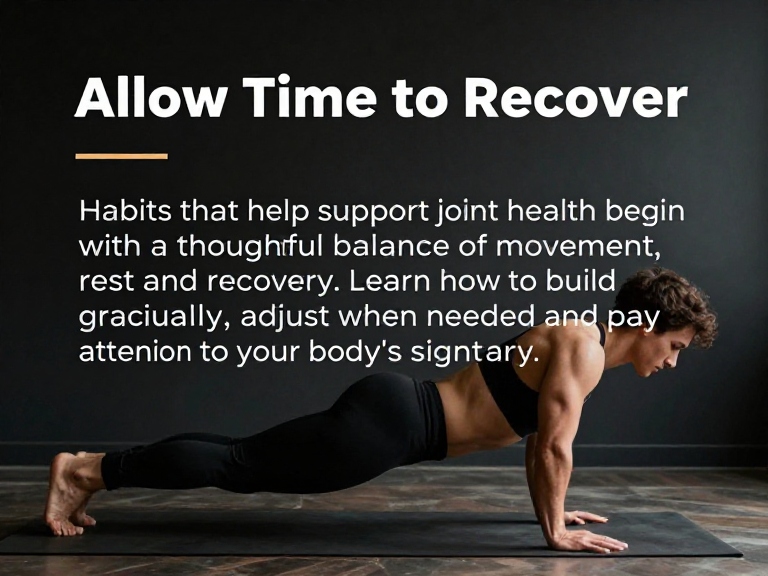
Physical activity asks your muscles, tendons, bones and joints to respond to changing demands. Rest periods provide an opportunity to recover from exertion and prepare for your next activity.
Without enough time to recover, a demanding routine may become difficult to sustain, especially when you are beginning a new exercise program or returning after a break.
Recovery does not always mean lying down or avoiding movement. For many people, it means varying the intensity of activity, taking breaks, sleeping adequately and temporarily reducing movements that aggravate symptoms.
The goal is to find a manageable rhythm. A shorter walk that leaves you feeling comfortable may be more useful for building consistency than an ambitious walk that leaves you struggling for the rest of the day. Progress also includes how well you can return to your usual activities over time.
A manageable starting point gives you an opportunity to notice how your body responds before adding more activity or intensity.
Choose an amount of activity that feels manageable rather than immediately attempting a demanding routine.
Consider lighter resistance, fewer repetitions or a slower pace when returning to exercise.
Increase duration, frequency or difficulty gradually instead of changing everything at once.
Notice how you feel during activity and later that day or the following day.

If a long walk leaves you unusually sore, consider starting with a shorter route. If you are returning to strength training, you might use lighter resistance, fewer repetitions or longer breaks between sets.
If you enjoy cycling, an easier pace or a shorter ride may be a sensible starting point. The right adjustment depends on your abilities and health.
There is no universal progression rate that is right for everyone. Give yourself time to build consistency.
Sometimes a practical adjustment can make movement more manageable without abandoning an activity altogether.

You do not always have to abandon an activity because it feels difficult. The important thing is to avoid treating discomfort as a challenge that must always be overcome.
A physiotherapist can suggest alternatives suited to your movement, strength and health needs.
✓ Choose a shorter session or divide activity into smaller periods.
✓ Reduce resistance, speed, distance or repetitions.
✓ Take breaks before fatigue or discomfort becomes difficult to manage.
✓ Alternate demanding days with lighter activities.
✓ Try lower-impact options, such as swimming or stationary cycling, if suitable.
✓ Use supportive footwear or equipment appropriate for the activity.
Variety can help make an active lifestyle more sustainable. If running is uncomfortable, another form of movement may be a better temporary option. If standing for long periods aggravates symptoms, dividing a task into shorter periods may help.
A steady routine may be easier to maintain than alternating between very demanding days and periods of exhaustion.
Consider spreading household chores and other demanding activities throughout the week rather than completing everything in one day.
Break larger tasks into smaller sections and alternate activities that place different demands on your body.
Notice changes in energy, movement and comfort. A pause or a less demanding activity may be appropriate.

Rest breaks do not need to follow a rigid timetable. Notice when your concentration, energy, movement or comfort begins to change.
A short pause, a change of position or a less demanding activity may be enough. At the same time, prolonged inactivity is not the best choice for every joint concern.
Where appropriate, gentle movement can help maintain everyday function.
Exercise is only one part of the wider picture. Sleep, nutrition, hydration and stress management also contribute to general health and everyday wellbeing.
Try to keep a regular sleep schedule and create a comfortable environment for winding down.
Include vegetables, fruits, whole grains, protein sources and unsaturated fats as part of a varied eating pattern.
Drink fluids regularly, especially when you are active or in warm conditions.
Set goals that fit your schedule and current abilities. A repeatable plan can be more useful than an exhausting one.
No single lifestyle habit can guarantee a particular recovery outcome. However, a consistent routine can support general health. If discomfort repeatedly interrupts your sleep, consider discussing it with a healthcare professional rather than simply accepting ongoing poor rest.
Pain should not be ignored simply because you are exercising. Changes in symptoms can help indicate when your routine needs adjusting or when professional advice is appropriate.

Some temporary tiredness or mild discomfort can occur when you try unfamiliar activity. However, pay attention to whether symptoms become more intense, last longer than usual, affect movement or interfere with everyday life.
If an activity causes sharp or increasing pain, significant swelling or a noticeable loss of movement, stop that activity and seek appropriate advice.
Persistent or worsening pain deserves attention rather than being dismissed as a normal part of exercise.
Arrange a medical assessment if joint pain keeps returning, affects sleep or everyday activities, is getting worse, or has not improved after a period of self-care. A healthcare professional can help identify possible causes and advise on suitable activity.
✓ Stop activities that cause sharp or increasing pain.
✓ Seek advice about significant swelling or reduced movement.
✓ Arrange assessment for persistent or worsening symptoms.

A joint that becomes hot and swollen alongside fever or feeling generally unwell needs urgent medical assessment.
Severe pain after an injury, inability to bear weight or a visibly displaced joint may require emergency care.
Do not rely on rest, exercise changes or supplements as a substitute for appropriate medical assessment when concerning symptoms occur.
After an injury or a period of reduced activity, returning immediately to your previous exercise level may not be appropriate.

Follow any instructions from your healthcare professional and build back toward your usual routine as symptoms, strength and confidence allow.
It can help to keep a simple activity diary. Note what you did, how you felt during the activity, and whether symptoms changed later that day or the following day.
Over time, these observations may reveal which routines are comfortable and which need adjusting.
Recovery rarely follows a perfectly straight line. You may have days when movement feels easier and other days when you need to do less. A temporary setback does not automatically mean you have caused damage, but new, severe or persistent symptoms should be assessed.
Adapt your plan rather than forcing yourself to meet a target at all costs.
Allowing time to recover is a practical way to approach physical activity with patience. Start with what you can manage, increase gradually, adapt movements when necessary and balance active periods with appropriate rest. Support these habits with adequate sleep, balanced nutrition and realistic expectations.
Most importantly, pay attention to changes in your symptoms. There is no need to push through worsening pain to prove that you are making progress. With a flexible approach, appropriate professional guidance when needed, and consistent attention to your well-being, you can make more informed decisions about movement and recovery as part of everyday life.

A sustainable routine does not have to be demanding. Small, manageable adjustments can help you stay active while respecting your current abilities and needs.
Listen to your body, allow time for recovery and seek professional advice when symptoms need attention.
Healthy movement is not about doing as much as possible in every session. It is about finding a manageable balance between activity, rest and recovery. Start gradually, adapt movements when necessary and pay attention to changes in your symptoms.
Adequate sleep, balanced nutrition, realistic expectations and appropriate professional guidance can all contribute to a more thoughtful approach to everyday joint health.
Explore Joint HealthHelpful answers to common questions about exercise, rest and recovery for everyday joint health.
There is no single rest schedule that suits everyone. It depends on the type and intensity of activity, your fitness, symptoms and health. Alternate demanding sessions with lighter activity or rest when needed, and follow professional guidance if you are recovering from an injury or managing a joint condition.
Do not ignore pain or automatically push through it. Reduce or stop an activity that causes sharp, increasing or significant pain. A gentler alternative may be suitable in some circumstances, but persistent symptoms should be discussed with a healthcare professional.
Begin with an amount you can manage comfortably and increase one element at a time, such as duration, resistance or frequency. Monitor how you feel during and after activity, and adjust the plan if symptoms become more difficult to manage.
Not necessarily. The appropriate approach depends on the cause of the pain. Some injuries require specific protection or rest, while many longer-term joint concerns benefit from suitable movement. A healthcare professional can help you decide what is appropriate for your situation.
Seek assessment if pain is worsening, keeps returning, affects sleep or normal activities, or does not improve. Hot, swollen joints accompanied by fever or feeling unwell require urgent medical attention. Severe pain after injury or an inability to bear weight may require emergency care.
Explore established health resources for additional information on physical activity, recovery and joint symptoms.
This article is for general educational purposes only and does not replace professional medical advice, diagnosis or treatment. Speak with a qualified healthcare professional about symptoms, injuries or individual health concerns.
Explore related topics covering joint structure, everyday movement and the role of hyaluronan in the body's connective tissues.

Explore cartilage and its role in the structure and function of healthy joints.
Read article →
Learn about synovial fluid and its role in the normal function of movable joints.
Read article →
Discover how muscles and connective tissues contribute to movement and everyday activity.
Read article →